KSB
Честит Великден
С вяра и доброта в сърцата, здрави и силни, да строим за хората! инж. Илиян Терзиев Председател на УС на КСБ

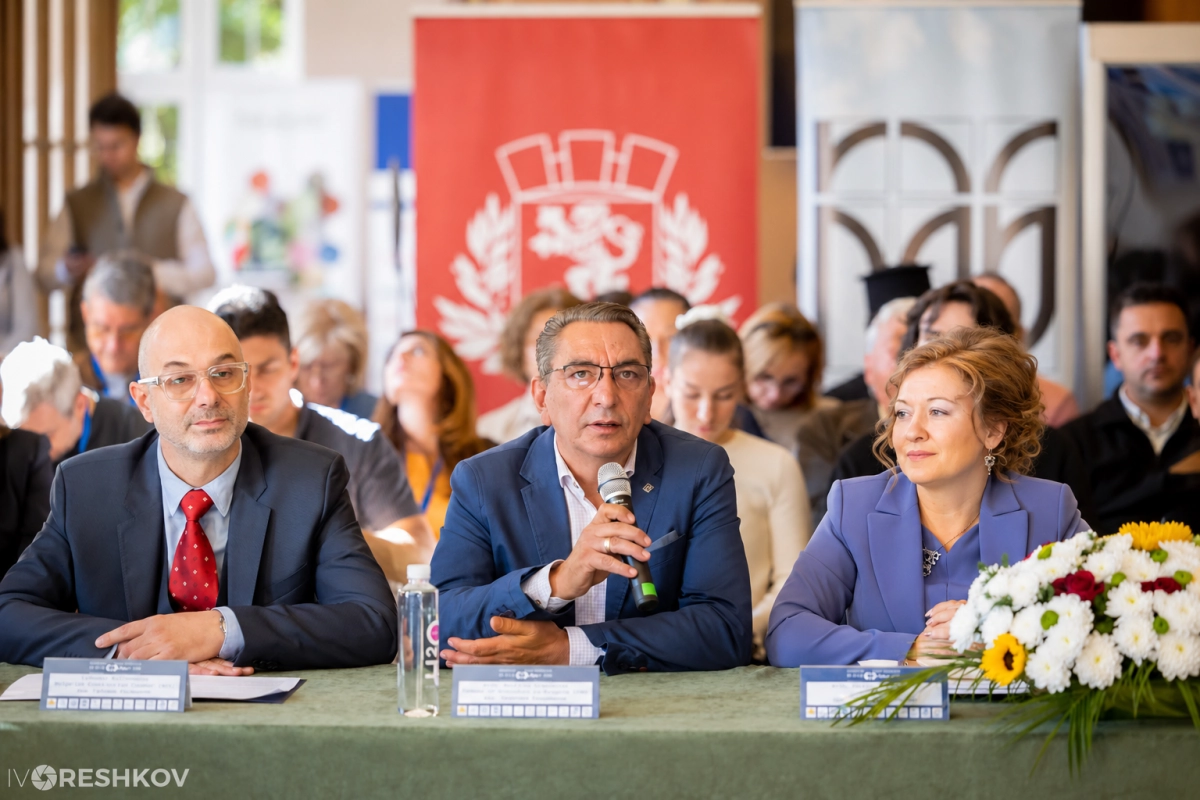
An institutional round table held as part of the ‘Bratsigovo – The Stone Flow of Time’ International Forum focused on legislative challenges, sustainable funding and the need for closer cooperation between the state, local authorities, religious institutions and…
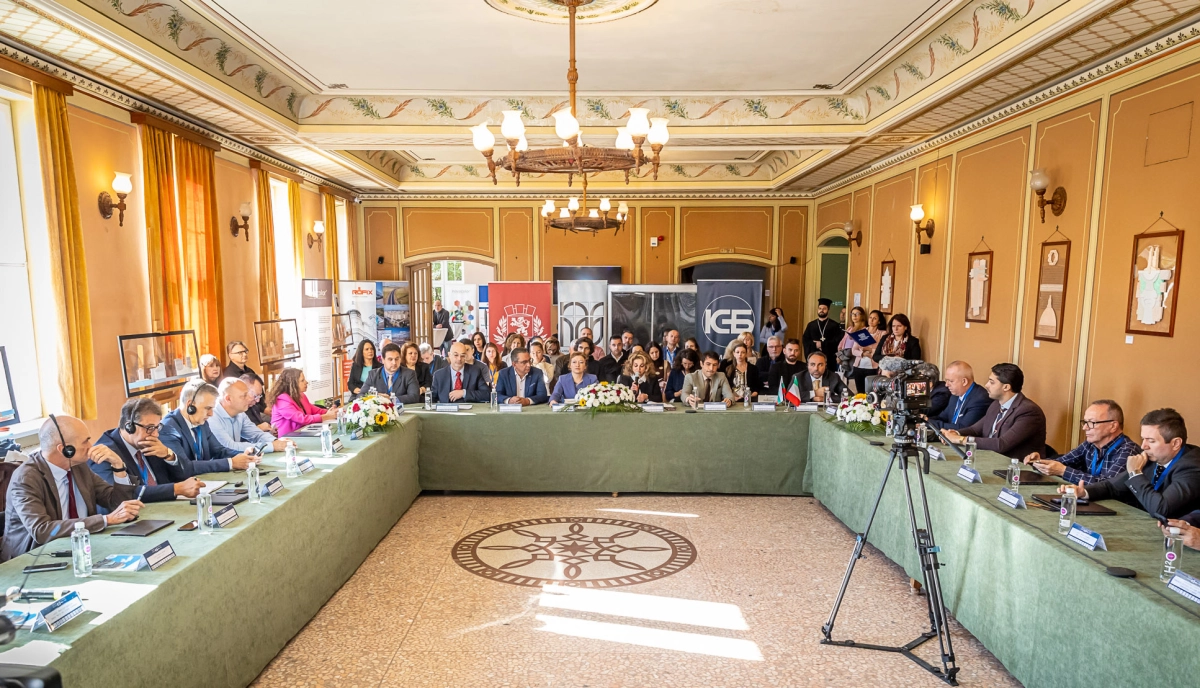
On 2 October 2026, an institutional round table on the theme ‘Churches – Architectural and Spiritual Heritage Through the Centuries. Preservation and Adaptation of Churches in the Modern World’.
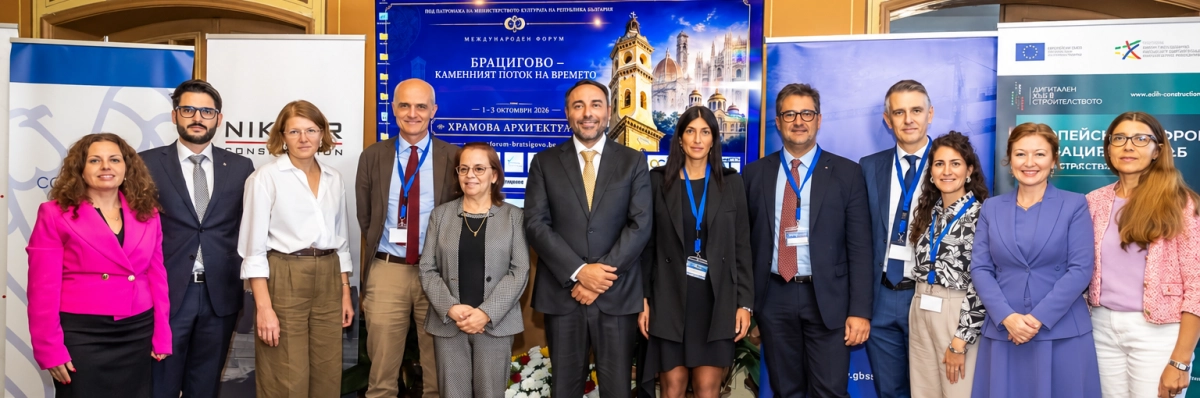
The event was a central highlight of the fifth edition of the International Forum ‘Bratsigovo – The Stone Flow of Time’, held from 1 to 3 October under the patronage of the Ministry of Culture.
The round table provided a forum for dialogue between representatives of state and local institutions, the diplomatic community, professional chambers, universities, the restoration community and international specialists in the field of cultural heritage.
The official opening of the International Forum ‘Bratsigovo – The Stone Flow of Time’ was accompanied by welcoming addresses from the Mayor of Bratsigovo Municipality, Nadezhda Kazakova, the Regional Governor of Pazardzhik, Eng. Borislav Bogoslovov, the President of the Chamber of Architects in Bulgaria, Arch. Borislav Vladimirov, the President of the Chamber of Builders in Bulgaria, Eng. Lyubomir Kachamakov, and the Director of the “Inspectorate for the Protection of Cultural Heritage” at the Ministry of Culture, Alexander Traikov; the Director of the Italian Trade Agency (ITA), Maria Maza, Director of the Italian Cultural Institute, Maria Maza, Vice-Chair of Confindustria Bulgaria, Giovanni Martinelli, and Vice-Rector of the University of Architecture, Civil Engineering and Geodesy, Prof. Dr. Eng. Elena Peneva. Official messages of congratulations were received from the Minister of Culture, the Minister of Regional Development and Public Works, the Minister of Agriculture and Food, and the Rector of the University of Architecture, Civil Engineering and Geodesy, Assoc. Prof. Dr. Arch. Gichka Kutova. These were read out by the moderator of the round table and chief organiser of the forum, Arch. Desislava Dimitrova. The broad institutional and international representation underscored the significance of the forum as a platform for professional dialogue and cooperation in the field of architectural and cultural heritage conservation.
One of the key issues raised within the thematic framework of the discussion was the need to overcome the fragmented approach to the conservation of church heritage in Bulgaria.
Historic churches possess architectural, artistic, spiritual and social value. Caring for them requires specialist knowledge and coordinated action by a wide range of stakeholders – from owners and church councils to designers, restorers, builders and the relevant state institutions.
Particular attention was given to opportunities for improving the regulatory framework and administrative procedures governing conservation, restoration and repair work in churches designated as immovable cultural heritage sites.
Among the issues put forward for discussion was the possibility of establishing a specialised expert unit within the Ministry of Culture and/or the National Institute for Immovable Cultural Heritage, which would assist in the preparation, coordination and implementation of projects relating to church buildings.
Such an approach could contribute to better coordination between institutions, clearer procedures and more effective expert support for the owners and custodians of historic places of worship.
Architect Slavi Slavov gave a presentation on the Cultural Heritage Act in the context of the challenges facing the preservation of church heritage.
Architect Slavi Slavov, Head of the Regional Inspectorate for the Protection of Cultural Heritage for the South-Central Region at the Ministry of Culture, highlighted the discrepancy between the regulatory framework and actual practices regarding the protection of places of worship in Bulgaria. He highlighted the problems of insufficient administrative capacity, cumbersome approval procedures and the lack of effective coordination between the state, local authorities and the Bulgarian Orthodox Church. Using specific examples, Architect Slavov illustrated how unauthorised repairs and unsuitable building materials can lead to an irreversible loss of historical authenticity. As a possible solution, he pointed to the decentralisation of expert bodies and the introduction of fast-track procedures for emergency interventions, citing the successful regional model in France. Alongside these issues, the positive example of the Church of St Michael and St Gabriel the Archangels in Haskovo was highlighted, demonstrating the importance of good cooperation between church councils, restorers and institutions. The main message was the need for a more effective system of preventative care, expert support and the preservation of the authenticity of the church heritage.
One of the central themes of the forum was the issue of securing long-term financial instruments for the preservation of church heritage.
The maintenance and restoration of historic places of worship often require significant investment, specialised technologies and the involvement of highly qualified specialists. This poses serious challenges for religious communities and local authorities, particularly in smaller towns and villages.
In this regard, the thematic programme provided for a discussion of the possibilities for developing targeted national and European funding mechanisms, as well as specialised programmes for places of worship of high architectural, historical and cultural value.
Of particular importance is the possibility of channelling funds not only towards emergency repairs, but also towards preventative conservation, periodic maintenance, architectural surveying, 3D laser scanning, structural surveys and the preparation of high-quality investment projects.
During the afternoon session on 2 October, the topic of funding was further explored through the presentation of the Ministry of Culture’s budget programme ‘Preservation of Immovable Cultural Heritage’ by the Ministry of Culture, which featured architect Alexander Staynov, architect Irina Argirova and Yuliana Gradinarska.
A key part of the forum’s concept was the international exchange of knowledge and best practice.
The participation of specialists from Bulgaria, Italy, Romania and Morocco gave the event an international context in which different approaches to the preservation of church architecture could be compared and adapted to Bulgarian conditions.
A special place in the programme was given to Italy’s experience in the restoration and management of cultural heritage, presented in an overview by the director of the Association of Restorers in Italy – architect Andrea Grilletto. He emphasised innovations and contemporary methods for showcasing the cultural heritage of churches.
The same day also featured specialist presentations on Milan’s Duomo Cathedral, presented by Francesco Canali, an engineer – director of the restoration department at the Duomo in Milan – and the marble quarry used for its construction. He also outlined the important policy of self-governance and independence for iconic sites in Italy, which enables a long-term management policy and plan to be implemented by a permanent team responsible for the site in question.
Among the international experts included in the programme was Mr Vincenzo Calvanese, Director of the Technical Department at the Archaeological Park of Pompeii, Italy. His professional experience is linked to one of the world’s most significant archaeological sites, where the preservation of the tangible heritage must constantly be balanced with the requirements for structural safety, accessibility, public use and sustainable development.
Pompeii exemplifies a contemporary approach in which the archaeological site is not viewed merely as a collection of ruins in need of restoration, but as a living cultural space offering opportunities for education, scientific research, events and international cooperation. A particularly important aspect of this model is the shift from isolated restoration interventions to a systematic policy of preventative conservation, monitoring the condition of historic structures and long-term planning of the necessary investments.The experience of Pompeii also demonstrates the potential for building new partnerships in which public administration, scientific expertise, private initiatives and cultural tourism can contribute to the sustainable development of archaeological sites.This approach is of particular significance for Bulgaria, where numerous temples and historic complexes require not only restoration work but also comprehensive models for management, maintenance and public engagement.Mr Kalvanese’s professional experience highlights an important perspective for the future of cultural heritage: its preservation and socialisation are not conflicting goals, but interlinked processes that can ensure both the preservation of historical authenticity and the sustainable development of local areas.
Another key focus and example of best practice was the Cathedral of Santa Maria del Fiore in Florence, presented by Architect Beatrice Agostini – head of the restoration department – and Architect Mara Landi.
These examples are particularly valuable due to the long-standing traditions in the maintenance of monumental religious complexes, the continuity between generations of specialists, and the combination of traditional restoration techniques with modern scientific and technological methods.
International cooperation opens up opportunities not only for the exchange of expertise, but also for the development of joint educational initiatives, practical training and partnerships between academic institutions, professional organisations and restoration centres.
Another important aspect of the topic was the need to raise awareness amongst the owners and custodians of places of worship regarding the specific requirements for interventions involving immovable cultural heritage.
Even when renovation work is undertaken with the intention of preserving a building, a lack of specialist expertise can lead to the irreversible loss of authentic architectural elements, murals, decorative details and historic building materials.
Therefore, among the topics discussed was the need for practical guidelines and training for clergy, church councils and local communities.
Their role is essential not only for the day-to-day upkeep of the churches, but also for the timely identification of risks, the preparation of investment initiatives and engagement with the relevant institutions.
The choice of Bratsigovo as the venue for such an international dialogue carries special symbolic significance. The town and its school of architecture and construction are inextricably linked to the development of Bulgarian National Revival architecture and to the master craftsmen’s traditions that have left a remarkable mark on the construction of churches and public buildings. It is precisely this historical continuity that makes the forum a natural setting for bringing together traditional building knowledge, contemporary restoration practices and institutional responsibility towards cultural heritage.
Since its inception in 2021, the ‘Bratsigovo – The Stone Flow of Time’ forum has developed as a platform for collaboration between the professional community, institutions, academia and local communities. Its fifth edition expanded on this approach, focusing not only on the architectural characteristics and artistic value of the churches, but also on issues concerning their management, funding and future preservation.
The significance of the institutional round table lies, above all, in placing issues relating to church heritage on the common agenda of the state, the professional community and society at large.
Alongside the specific challenges facing individual restoration projects, the forum highlighted the need for a broader and longer-term approach – one that links the regulatory framework, funding, professional education, research and international cooperation.
The next important step is to translate these themes into concrete initiatives, partnerships and proposals for improving policies on the conservation of immovable cultural heritage.
For places of worship are much more than architectural monuments. They are places of spirituality, collective memory and cultural identity; they bear witness to the craftsmanship of generations of builders and artists; and they form a living link between the past and the present.
This is precisely the broader message of the International Forum ‘Bratsigovo – The Stone Flow of Time’ – that cultural heritage can only be preserved and passed on to future generations through shared responsibility and active cooperation.
For further information: www.forum-bratsigovo.bg
С вяра и доброта в сърцата, здрави и силни, да строим за хората! инж. Илиян Терзиев Председател на УС на КСБ

Управляващият орган на Оперативна програма „Иновации и конкурентоспособност“ 2014-2020 (УО на ОПИК) предвижда да обяви процедура за подбор на проекти „Подкрепа на микро- и малки предприятия за преодоляване на икономическите последствия от пандемията COVID-19“ Във връзка с възникнали въпроси от…
Процедура BG16RFOP002-2.073 „Подкрепа на микро и малки предприятия за преодоляване на икономическите последствия от пандемията COVID-19“ ще бъде активирана в ИСУН на 14.05.2020 г. и от 10:00 ч. ще могат да се подават проектни предложения. Крайният срок за подаване на документи е 15.06.2020, 16:30…
От 14.05.2020 г. на уеб сайта на КСБ се предоставя възможност компаниите, вписани в Централния професионален регистър на строителя (ЦПРС), да обменят информация, свързана с участия в проекти по различни оперативни програми; да публикуват обяви относно търсене и предлагане на работна сила…