KSB
Честит Великден
С вяра и доброта в сърцата, здрави и силни, да строим за хората! инж. Илиян Терзиев Председател на УС на КСБ


The Bulgarian Construction Chamber (BCC) is contributing to the achievement of national energy efficiency targets in the building sector by strengthening the link between education and business. As part of the BUILD UP Skills Bulgaria 2030 initiative, on 17 January in Sofia, as well as online, a conference was held under the motto ‘Education and…’
As part of the BUILD UP Skills Bulgaria 2030 initiative, a conference was held on 17 January in Sofia, as well as online, under the theme ‘Education and training for energy efficiency and renewable energy in buildings’. The key objective of the project, funded under the EU’s Horizon 2020 programme, in which the Bulgarian Construction Chamber (KSB) is an active partner, is to develop a roadmap for upskilling in the construction sector to implement solutions in the field of energy efficiency and renewable energy.
As presented by Mr Dragomir Tsanev, Executive Director of EnEffect and project coordinator, the initiative has a ten-year history, during which cooperation in the field of vocational education and training within the sector has been proven. “In Bulgaria, we have managed to train over 2,000 construction specialists, but this is far from enough. Our strategic goals for 2030 are linked to the construction sector making an increasing contribution to the transition to green energy. This, in turn, requires the creation of a framework for a system of continuing professional development in construction”, explained Mr Tsanev.
The event was attended by experts from the Bulgarian Construction Chamber (BCC), the Agency for Sustainable Energy Development (ASED), the ‘EnEffect Centre for Energy Efficiency’ Foundation, the National Agency for Vocational Education and Training (NAVET), and the Bulgarian Association for Insulation in Construction (BAIS), all of whom are partners in the project.
The focus was on the role of vocational education in achieving the national energy efficiency targets in the building sector, as well as trends in vocational education and training linked to necessary changes in national educational standards for vocational specialisations in the construction sector. The results of the BUILD UP Skills Bulgaria 2030 project for the period from 2011 to 2022 were also presented, along with expectations regarding the new phase of the initiative’s implementation up to 2030.
Through the revitalisation of the National Platform for Dialogue, as one of the project’s key activities, it is expected that at least 150 stakeholder representatives will be engaged in professional discussions, as well as to analyse and quantify the demand for education and training services amongst construction firms, whilst examining attitudes towards the new requirements arising from the transition to ‘green energy’.
As part of the project, an up-to-date analysis of the situation at national level will be carried out with regard to national climate and energy policies, training and education in the construction sector, gaps in training programmes, the demand for qualified trainers, and the need for skilled workers and professionals. The aim is to map qualification needs and gaps for each relevant occupation at every level of the EQF (European Qualifications Framework) and to identify existing training and educational content, whilst developing a framework for a Continuing Professional Development (CPD) system to be adopted by the relevant stakeholders. The expected outcome of the project – the integration of the developed National Roadmap for the integration of training on smart energy solutions for buildings into core curricula and practices is crucial for developing professionals and increasing the number of qualifiedworkers and specialists to achieve the 2030 national targets in the construction sector.
Mr Ivaylo Aleksiev, Executive Director of AUER, provided a comprehensive overview of the European legislative framework relating to the transition to clean energy, alongside the challenges posed by the Green Deal. This includes the Energy Efficiency Directive, the Energy Performance of Buildings Directive and the Directive on the promotion of the use of energy from renewable sources, which form the basis of the dimensions of the Energy Union as a whole, namely: the internal energy market, energy security, energy efficiency, decarbonisation, research, innovation and competitiveness. The objectives, priorities, planned measures and resource estimates under the Long-Term National Strategy to Support the Renovation of the National Building Stock of Residential and Non-Residential Buildings by 2050 For Bulgaria, the measures set out in this strategic document represent both hope and opportunity, whilst their implementation requires the mobilisation of a number of sectors, particularly the construction sector, as well as society as a whole.
In this context, he highlighted the development of vocational education and training as a priority and emphasised the need for intensive work by all professional communities.
Lyuba Krasteva (NAVET) highlighted the ‘Modernisation of Vocational Education and Training’ project, explaining “It provides for changes to the structure of the list of occupations and the structure of the national educational standards, with the aim of reducing the number of occupations whilst also modernising the national examination syllabuses. There will also be changes to the content of the curricula and programmes.” She spoke about the active involvement of the National Agency for Vocational Education and Training (NAVET) in implementing and introducing the changes, which are already yielding results.
Mr Dimitar Koparov from the Bulgarian Construction Chamber (BCC) discussed in detail the BCC’s focused efforts to encourage active employer participation in policy-making and the implementation of activities, organised into the following strategic areas:
The experts focused on the role of business as a source of knowledge regarding new products and technologies in the construction sector.
BAIS highlighted some of the problematic aspects identified by the construction industry in its efforts to cooperate with state bodies regarding the professional qualifications of staff and specialists in the sector, namely:
Particular attention was paid to practical training as the so-called ‘second pillar’ of skilled workers’ qualifications, the importance of work placements and apprenticeships – which are still too formal – the development of mentoring, and so on.
Overall, the participants were united in their desire for even more active cooperation and coordinated efforts to raise the standing of the ‘builder’ profession and its related fields, as well as to establish it as a leading profession in the light of future ‘green’ challenges.

С вяра и доброта в сърцата, здрави и силни, да строим за хората! инж. Илиян Терзиев Председател на УС на КСБ

Управляващият орган на Оперативна програма „Иновации и конкурентоспособност“ 2014-2020 (УО на ОПИК) предвижда да обяви процедура за подбор на проекти „Подкрепа на микро- и малки предприятия за преодоляване на икономическите последствия от пандемията COVID-19“ Във връзка с възникнали въпроси от…
Процедура BG16RFOP002-2.073 „Подкрепа на микро и малки предприятия за преодоляване на икономическите последствия от пандемията COVID-19“ ще бъде активирана в ИСУН на 14.05.2020 г. и от 10:00 ч. ще могат да се подават проектни предложения. Крайният срок за подаване на документи е 15.06.2020, 16:30…
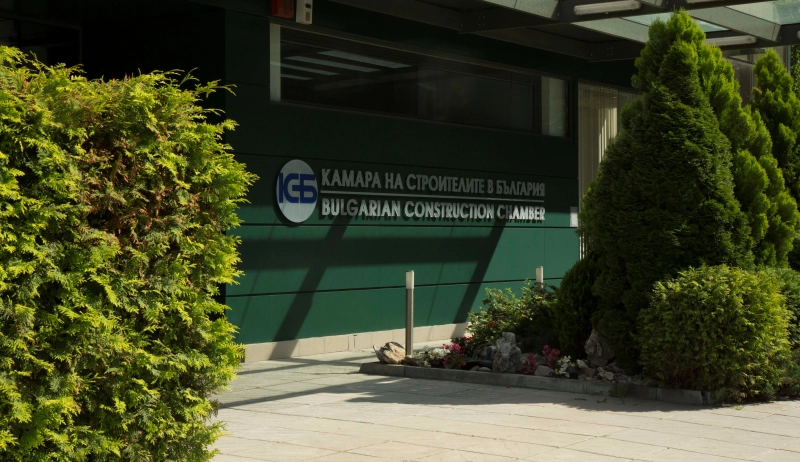
От 14.05.2020 г. на уеб сайта на КСБ се предоставя възможност компаниите, вписани в Централния професионален регистър на строителя (ЦПРС), да обменят информация, свързана с участия в проекти по различни оперативни програми; да публикуват обяви относно търсене и предлагане на работна сила…